
The regulatory changes brought in by the insurance regulator and the amendments proposed to the Insurance Act by the Centre may herald a new dawn for the sector in India. This may result in insurers bringing out more consumer-led products, top honchos of general insurance companies of the country concurred at the Business Standard BFSI Insight Summit 2022.

India has a huge untapped population which doesn't have facilities for financial aid and insurance, and it is perhaps plausible to look at the option of having niche players catering to smaller sectors akin to non-banks and microfinance institutions in lending, said Rakesh Joshi, member (Finance & Investment), Insurance Regulatory and Development Authority of India (Irdai). Speaking at the Business Standard BFSI Insight Summit, Joshi said, "Today, most of our insurance companies operate at a national level. There is arguably a case for having differentiated operations, which cater to niche sectors the same way we have non-banking financial companies (NBFC) and microfinance institutions in lending." "The capital requirement for niche players may not be as large as those having national ambitions. "Enabling these niche players, which require lower capital, will enhance the penetration in areas which hitherto had not seen traction from large players," he said.

In order for life insurance customers to attain maximum benefits, it is crucial for the persistency ratio to be far higher than its current level, top executives of the industry said at the Business Standard BFSI Insight Summit on Thursday. The persistency ratio is a metric that measures the number of policyholders who continue paying renewal premium and is gauged at varying stages in the life of a policy. A higher persistency ratio is seen as an indicator of an insurance product that caters satisfactorily to the needs of a customer.

Health premiums have picked up again after a slight moderation in growth, taking the non-life insurance industry's growth to 22 per cent in November, and to almost 17 per cent so far this financial year. Health premiums grew by 22.54 per cent in the April-November period, driven largely by group health plans, which have seen good growth due to rationalisation of discounts in premiums caused by adverse claim ratios in prior periods, medical inflation, and enhanced coverage. Health premiums grew by 29 per cent in the same period last year.

The Lok Sabha elections in 2024 are not a consideration when it comes to monetary policymaking, said Reserve Bank of India governor Shaktikanta Das to underscore the central bank's commitment to controlling inflation. "It's not possible for me to comment what we do in the next MPC (Monetary Policy Committee), but one thing I can tell and I would like to make it very clear-that the fact of elections coming up in 2024 is not a factor at all so far as monetary policymaking is concerned. "Monetary policymaking is for checking (and) controlling inflation," Das said at the Business Standard, BFSI Insight Summit.

Liquidity in the banking system has slipped into a deficit for the first time in three weeks, prompting banks to borrow the largest quantum of funds from the Reserve Bank of India (RBI) in around a month and a half. The key catalyst for the sudden tightening in liquidity was due to outflows on account of advance tax payments, which occur towards the end of a quarter. Analysts also cited other factors such as a currency leakage and possible interventions by the RBI in the foreign exchange market, which contributed to the tighter liquidity conditions.

The bank has said rent payments will not earn reward points, and redemption of reward points on various cards have been capped in certain segments.

Exactly a fortnight ahead of the Reserve Bank of India's (RBI's) next monetary policy review, a key market indicator of interest rates - the overnight indexed swap (OIS) - suggests that the central bank may tighten policy by 35 basis points and then refrain from further rate hikes. RBI Deputy Governor Michael Patra recently described the OIS as the primary instrument for hedging interest rate risk in India. The six-member Monetary Policy Committee (MPC) of the RBI will meet on December 5-7.

Banks looking to raise capital via bond sales to fund decade-high credit growth were compelled to put some of these debt issuances on hold amid a sharp rise in yields since late September, sources told Business Standard. A major private lender, Axis Bank, has not yet followed through with a planned issuance of infrastructure bonds worth around Rs 3,000 crore. This is because volatility in the bond market in late September led to investors seeking higher yields, sources said.

Credit card issuers saw significant erosion of their card base during the July-September quarter as the Reserve Bank of India's (RBI) norms mandated deactivation of cards that have been inactive for a year. The second quarter of the current financial year saw outstanding cards-in-force decline by 2.55 million to 77.7 million. Prior to this, the industry, on an average, was witnessing a net addition of over 1.5 million credit cards a month as players became aggressive on the unsecured lending business after the pandemic.

Based on the current momentum, the funds likely to be raised through the RBI's relaxed window would be $3.5 billion-$4 billion.
The outstanding credit card base dropped to 77.99 million in August from over 80 million in July, mainly on account of the new norms of the Reserve Bank of India (RBI) that warrant the deactivation of cards that are inactive for a year. While there was a 2.8 per cent decline in net card additions on a month-on-month (MoM) basis in August, a first in many months, credit card spends slipped 3 per cent on a high base. Still, spends topped the Rs 1-trillion mark for the sixth consecutive month.

The rupee has depreciated 9.7 per cent against the US dollar over a year and with the RBI stemming the rupee's weakness through dollar sales, its reserves have dropped to their lowest levels since October, 2020. The fall in reserves has widespread implications.

Come October 1, merchants, payment aggregators and acquiring banks can no longer store the card details of customers.
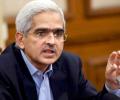
The increasing involvement of Big Tech in the financial system could give rise to concentration risk and there are potential spillovers, which call for closer attention, Reserve Bank of India (RBI) Governor Shaktikanta Das said on Tuesday. "...enormous amounts of consumer data is being generated and leveraged upon by a few entities (the so-called Big Tech) by virtue of their huge customer base. "Such developments raise concerns on concentration risk and potential spillovers as their level of engagement with the financial system strengthens in the years to come," Das said at the Global Fintech Fest 2022.

Surplus liquidity in the banking system as measured by absorption of excess funds by the Reserve Bank of India (RBI) fell sharply at the end of the last week due to outflows on account of advance tax payments. According to the RBI data, the net liquidity absorbed by the central bank on September 16 was at Rs 3,243.57 crore, much lower than the average of Rs 56,809.92 crore in the preceding four days of the week. The average absorption of funds by the RBI so far in September is at Rs 1.13 trillion, against the average of Rs 1.2 trillion in the previous month, the data showed.

To educate customers on the modus operandi of financial fraudsters and share inputs on safe banking habits, banks are now coming up with awareness campaigns aimed at preventing customers from falling into the trap of fraudsters.

If there was one event that made the month of August stand out, it was a strengthening of the dollar index to levels last seen only 20 years ago, as the Federal Reserve dispelled all doubts about its intention to continue raising interest rates. Predictably, most currencies suffered against the US unit, with the bulk of the losers belonging to the emerging markets pack. Amid the volatility, the rupee, however, has displayed significant resilience and fared much better than most of its peer currencies.
Credit card spends touched an all-time high of Rs 1.16 trillion in July, registering a growth of 6.5 per cent on a month-on-month basis and 54 per cent year-on-year, latest data put out by the Reserve Bank of India revealed. Spends have topped the Rs 1 trillion level for five consecutive months now. Industry participants are expecting further tailwinds in credit card spends with the onset of the festive season, where spends typically remain at an elevated level.

Commemorating 75 years of India's independence, SBI has launched a 75-day Utsav Deposit Scheme, offering 6.10 per cent for fixed deposits. Senior citizens will get an additional 0.50 per cent and the offer is on until October 30, SBI said.
 © 2025 Rediff.com - Investor Information - Advertise with us - Disclaimer - Privacy Policy - Sitemap - Feedback - About us - Terms of use - Grievances